


Every organization has its own risk appetite! What's yours?
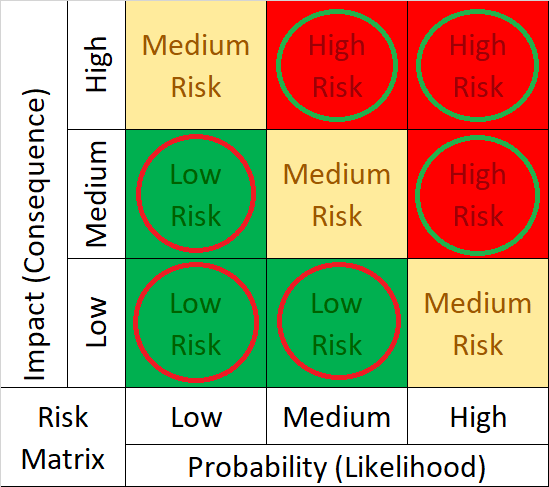
The success or failure of any business depends on its risk-taking capability. Every organization has its own risk appetite. Some organizations take a leap by venturing into unexplored areas and still emerge as leader of leaders. Some evaluate the risks, follow the leaders and adapt themselves for sustainability. While others misinterpret the risks and succumb to their own actions or inactions. Managing risks is not one-time activity, it’s a continuous journey and one instance of negligence can cause irreparable damages. Most of the times, you don’t even get a second chance to correct your mistakes.
Often, risks arise from areas which are obvious or expected. Seldom, risks can catch you totally unaware because they arise from completely unexpected or unprecedented situations. Risk taking capabilities of organizations can be evaluated by its interactions with its customers, partners, vendors and even with its own employees. It eventually reflects in the culture of the organization.
In simple terms, a risk can be defined as a possible future event that could cause harm or loss or affect the ability to achieve objectives. John F. Kennedy once said, “The best time to repair the roof is when the sun is shining”, means we don’t have to wait for something unsolicited to happen and then start working on damage control. In other words, by taking right actions at the right time, we can avoid certain unwanted situations.
Future has always been unpredictable and will always remain so. Until few years back, the circumstances were changing at very slow pace, most of the changes were cyclic in nature and easier to predict. The pace at which the changes are taking place now is already incredible, non-cyclic and highly unpredictable. Due to these reasons, organizations need to prepare for uncertain and volatile circumstances arising due to technological disruptions, supply chain failure, fierce competition, cyber-attack, data protection, evolving regulatory requirements and global crises such as outbreak or pandemic, climate change, economic slowdown and geopolitical issues. Today, success of a project or a business depends largely on the organization’s capability of effectively managing the risks at every stage. A mistake in identification and management of a major risk could lead to the failure of entire project or even failure of entire organization. Always operating in the low risk zone can make an organization risk averse and it slowly loses business to its competition and eventually depletes.
In one of my previous blogs, I already said that technological evolutions are posing threat to the skills that exist today and at the same time, new opportunities are being created expeditiously for futuristic skills.
Risk Management is rapidly evolving as a futuristic skill in the current times. Role of Risk Management existed in several large organizations since long, primarily as a backend support function. However, the expectations are still evolving, which are bringing this role to the center stage as a leadership position. This role will not be expected to merely caution or to stop the organizations for taking risks. Whereas, risk managers are now expected to enhance the risk-taking capabilities of the organizations by enabling them to take risks in the rapidly changing business environments. Key ingredients for success in this role are deep knowledge of the industry, alertness to changes, situational thinking and strategic planning. They not only help to identify the risks, but also analyze, applying risk response strategies, developing risk response plans for identified risks. They also monitor and control the execution of risk response plans and ensure minimizing the overall risk exposure for the organization and contributing to its profitable growth.