

Ashish Seth

Ashish Seth

Helping organizations get complex commercial decisions right | Global Advisory Board Member of WorldCC | Deal structuring | Strategic negotiations | Driving profitable growth | Risk governance

Mumbai, Maharashtra, India

Rich and varied experience in managing complex deals and programs under Strategic Outsourcing, Managed Services, BOT, Revenue Sharing, Lumpsum Fixed Fee, Agile and various other commercial models for Engineering, IT, Telecom and Infrastructure services.

Key skills: Commercial modelling, Risk management, complex negotiations and program management

Capgemini Capgemini
Bangalore University Bangalore University

Posts from Ashish Seth

Trust

We all understand that the fundamental purpose of a contract is to create economic value for organizations involved. This is well known fact that if two organizations with complimentary capabilities collaborate with each other, can create enormous value for both. That will be possible only if the contract between them is focusing on the relational aspects and trust. Yet, almost all the organizations across the world leave behind so much value on the table just because they see more benefit in using competition as a negotiation tool for transferring their risks to their vendors or suppliers and for meager savings which the perceive as substantial value addition.

Why most contracts are diverting from their purpose?

Over the years, almost every organization across the globe has endeavored to use contracts as an instrument to buy products or services from a pool of vendors or suppliers, rather than creating strategic partners for overall success of their business. We have also witnessed over last several decades that the majority of contracts focused heavily on risk transfer rather than creating a collaborative environment with their strategic partners. Organizations spend majority of their time in negotiating clauses related to penalties, risk transfer and termination, with a little focus on joining their forces for mutual benefit.

It is evident from the various studies conducted by World Commerce & Contracting, including their iconic Benchmark Report and Most Negotiated Terms Report, that most important T&Cs are not being focused while negotiating contracts. It is also observed that rigid organizational processes and stakeholder emotions are largely driving contract negotiations in today’s time.

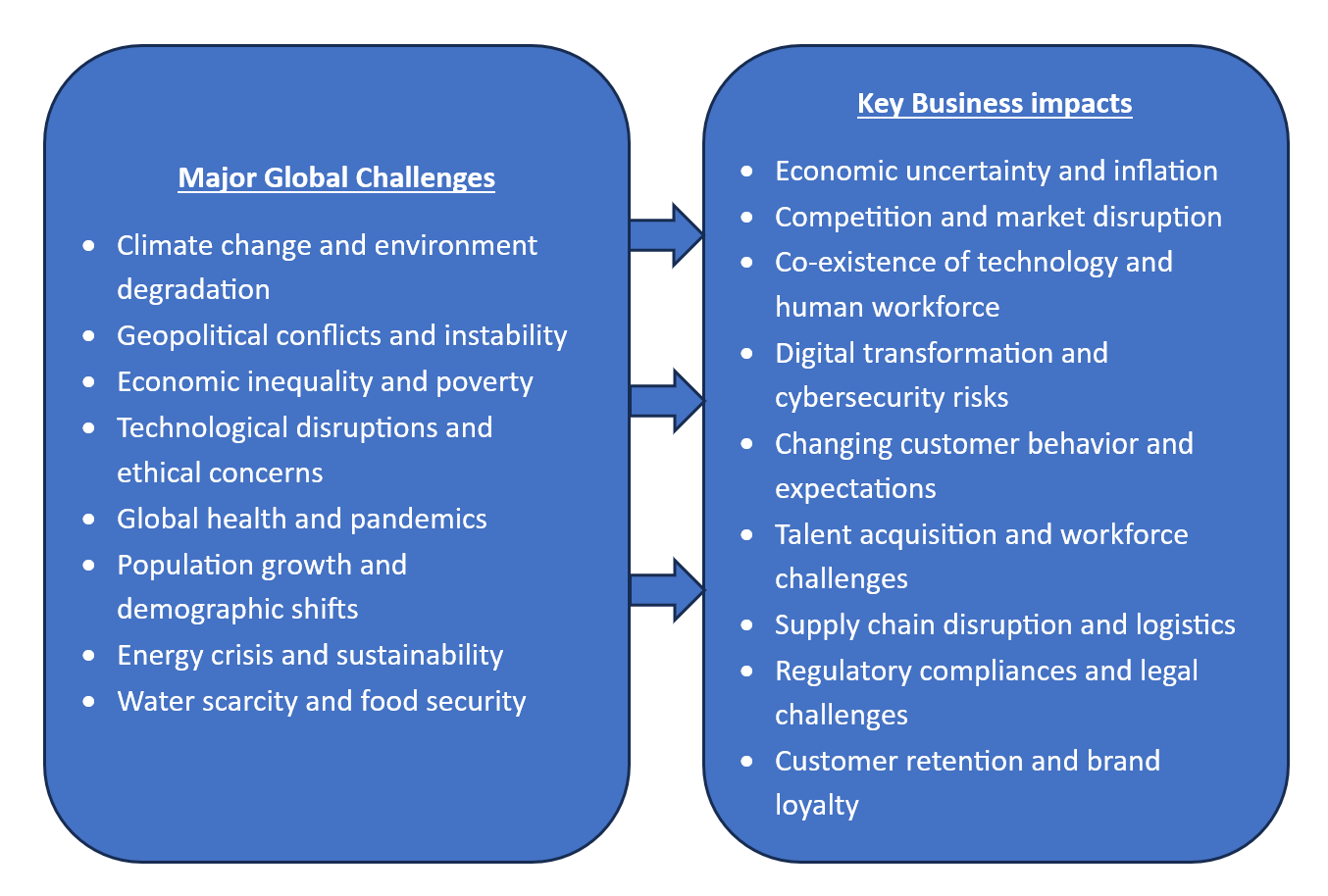
Global challenges impacting businesses & creating new opportunities
Global

Complexity of business contracts is increasing with global challenges. Business landscape is changing & so are our contracts! Evolution of technology, geopolitics, climate change and various other challenges has disrupted every industry and purpose of contracts is also evolving in this journey. Although, unprecedented challenges have surfaced because of globalization of business, we have also witnessed opportunities that never existed before. This has resulted in transformed business models and out of the box commercial models, which has created multifold opportunities for new and existing businesses. Majority of products have turned into services due to such evolutions.

Why most contracts are difficult to implement?

Due to mass globalization, contractual risks are influenced by multiple factors in today’s time. Risk aversion strategies of large organizations have forced them to templatize their contracts in order to mitigate the identified risks, irrespective of type of service or product being bought. This approach unnecessarily drifts the focus to unwanted Terms and Conditions and also increase the complexity of contracts multifold. On top of it, many stakeholders emotionally attach themselves with these generic, broad and one-sided T&Cs of all-purpose contract templates due to lack of their understanding of real business problems. Most suppliers and vendors also agree to such T&Cs due to fierce competition. This unknowingly makes the contracts rigid, one sided and difficult to implement, leaving behind the fundamental purpose of the contract.

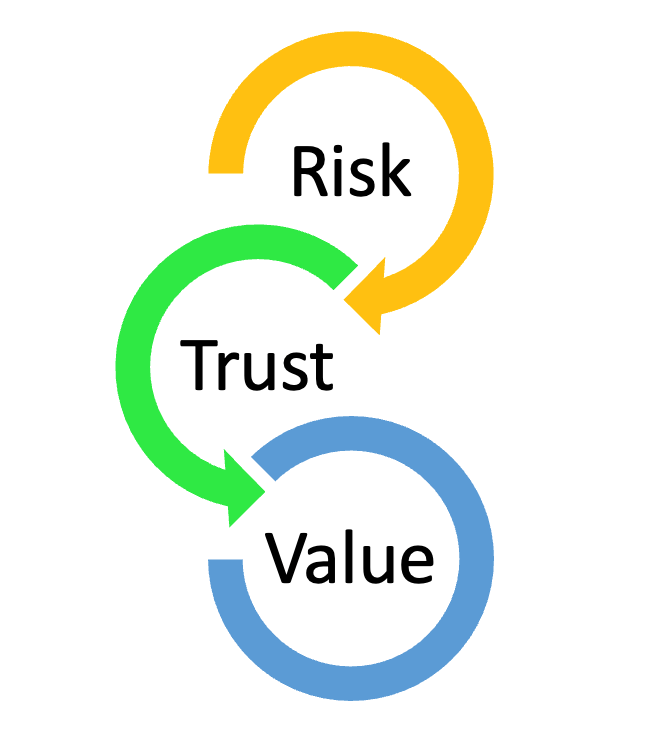
Managing risks and creating value through trust
Managing

Contracts are fundamentally not required to be rigid, one-sided and complex. It is not difficult to select a strategic partner based on complementing capabilities and aligned business principles. Then it becomes easy to adopt a collaborative approach for defining business solutions and to conduct a balanced assessment for proper allocation of risks, which can be clubbed with an appropriate commercial model with adequate transparency and agreed in a simple, balanced and pragmatic contract. This approach is capable of creating enormous economic value for both the strategic partners and can only be implemented on the foundation of Trust. In today’s time, when speed is of the essence, it is not difficult to implement such models with the help of generative AI assisted tools.

#negotiations #makeitreal #getthefutureyouwant #Capgemini #WorldCC #commercialmentor #contractmanagement #riskmanagement #ashishseth
x   x

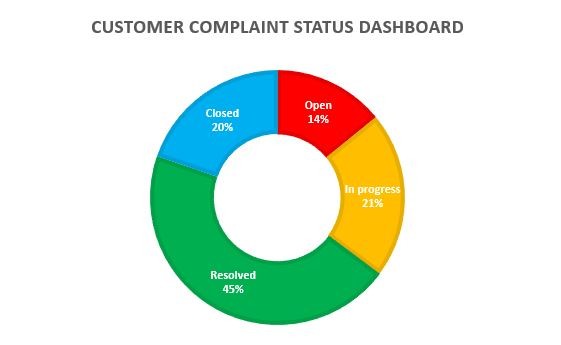
Customer Complaint status dashboard

You can’t afford to ignore customer feedback

Social Media is playing a pivotal role in today’s information era, where customer feedback has become a new ritual after every business transaction. Majority of business establishments have put together a process for collecting customer feedback. Additionally, there are plethora of online platforms available for posting customer reviews and feedback.

The purpose of receiving or providing feedback is to collect information regarding the customer’s overall experience about the product, service, process or any other business interaction. It is aimed at improving customer satisfaction, enhance customer loyalty, to address or reduce customer’s disagreements and most importantly, to enable business growth.

Despite major consequences on business outcome, customer feedback is often ignored even today by almost all organizations, either consciously or unconsciously.

If you don’t listen to your customer’s complaint, someone else will

A complaint is essentially a statement of dissatisfaction and can be easily captured in the form of feedback. Customers may have a complaint about something an organization has done or failed to do. Customer complaints may become blessing in disguise, if addressed properly. They have a potential to create a havoc for the organization, if ignored. Clever business representatives often take advantage by revealing the customer complaints of their competitors and portray their own products or services as better alternatives in front of their potential customers.

Customers often don’t complain

If customers are not complaining that does not mean all is well. A survey shows that out of 100 dissatisfied customers “97% don’t complain”, they just shift to the competitor. There are multiple reasons behind this behavior of customers. They think that their complaints are not welcome, or no one will listen to them or they will be treated with suspicion. They tried complaining in the past, but nothing happened, or they don’t know whom to complain. Process of complaining is time consuming and troublesome than moving on to next available alternative.

Should customer complaint be handled promptly?

If an organization is prompt in resolving customer complaints by rectifying problems with their product, services or any other processes, then they can even turn their dissatisfied customers into loyal ones. Prompt response give confidence to the customers that their complaints are being addressed. It helps to prevent future customer dissatisfaction, results in improved product quality and service delivery. Improvement in overall customer satisfaction leads to customer retention and attracts new customers for business growth. Customers may forget what you said but they will never forget how you made them feel.

That’s the reason why customer complaints in the form of feedback are a precious gift. A prompt action on customer complaints, which are no less than a gold mine, provides potential growth opportunities for every organization.

x   x

Probability

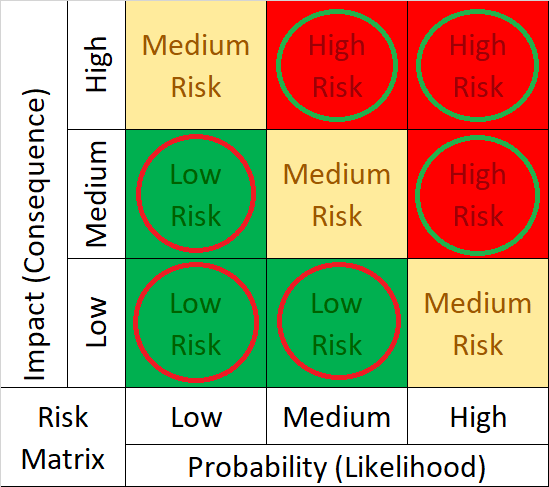
The success or failure of any business depends on its risk-taking capability. Every organization has its own risk appetite. Some organizations take a leap by venturing into unexplored areas and still emerge as leader of leaders. Some evaluate the risks, follow the leaders and adapt themselves for sustainability. While others misinterpret the risks and succumb to their own actions or inactions. Managing risks is not one-time activity, it’s a continuous journey and one instance of negligence can cause irreparable damages. Most of the times, you don’t even get a second chance to correct your mistakes.

Often, risks arise from areas which are obvious or expected. Seldom, risks can catch you totally unaware because they arise from completely unexpected or unprecedented situations. Risk taking capabilities of organizations can be evaluated by its interactions with its customers, partners, vendors and even with its own employees. It eventually reflects in the culture of the organization.

In simple terms, a risk can be defined as a possible future event that could cause harm or loss or affect the ability to achieve objectives. John F. Kennedy once said, “The best time to repair the roof is when the sun is shining”, means we don’t have to wait for something unsolicited to happen and then start working on damage control. In other words, by taking right actions at the right time, we can avoid certain unwanted situations.

Future has always been unpredictable and will always remain so. Until few years back, the circumstances were changing at very slow pace, most of the changes were cyclic in nature and easier to predict. The pace at which the changes are taking place now is already incredible, non-cyclic and highly unpredictable. Due to these reasons, organizations need to prepare for uncertain and volatile circumstances arising due to technological disruptions, supply chain failure, fierce competition, cyber-attack, data protection, evolving regulatory requirements and global crises such as outbreak or pandemic, climate change, economic slowdown and geopolitical issues. Today, success of a project or a business depends largely on the organization’s capability of effectively managing the risks at every stage. A mistake in identification and management of a major risk could lead to the failure of entire project or even failure of entire organization. Always operating in the low risk zone can make an organization risk averse and it slowly loses business to its competition and eventually depletes.

In one of my previous blogs, I already said that technological evolutions are posing threat to the skills that exist today and at the same time, new opportunities are being created expeditiously for futuristic skills.

Risk Management is rapidly evolving as a futuristic skill in the current times. Role of Risk Management existed in several large organizations since long, primarily as a backend support function. However, the expectations are still evolving, which are bringing this role to the center stage as a leadership position. This role will not be expected to merely caution or to stop the organizations for taking risks. Whereas, risk managers are now expected to enhance the risk-taking capabilities of the organizations by enabling them to take risks in the rapidly changing business environments. Key ingredients for success in this role are deep knowledge of the industry, alertness to changes, situational thinking and strategic planning. They not only help to identify the risks, but also analyze, applying risk response strategies, developing risk response plans for identified risks. They also monitor and control the execution of risk response plans and ensure minimizing the overall risk exposure for the organization and contributing to its profitable growth.